Touch the
real thing.
One shared instance of the shipped binary, serving a demo tree. No signup, no guided tour — the same pages the screenshots on this site came from, wiped back to a clean state on a timer. What you break, the next reset unbreaks.
Enter
shared · reset on a timerdemo.renar.asklera.fr
— sign in as demo / renar-demo-0.1.0. The
account is public by design and holds nothing.
What to expect, honestly:
Anyone may be walking the same tree at the same time. You will see their edits the way you would see a colleague's — live, if you enable refresh.
About every fifteen minutes, the demo root is wiped to its seeded state and sessions die. Nothing you store there survives; nothing you store there should be secret.
Not a canned replica — the same artifact the release channel ships, with the demo posture declared. If it breaks, that is a bug we want to know about.
What to try
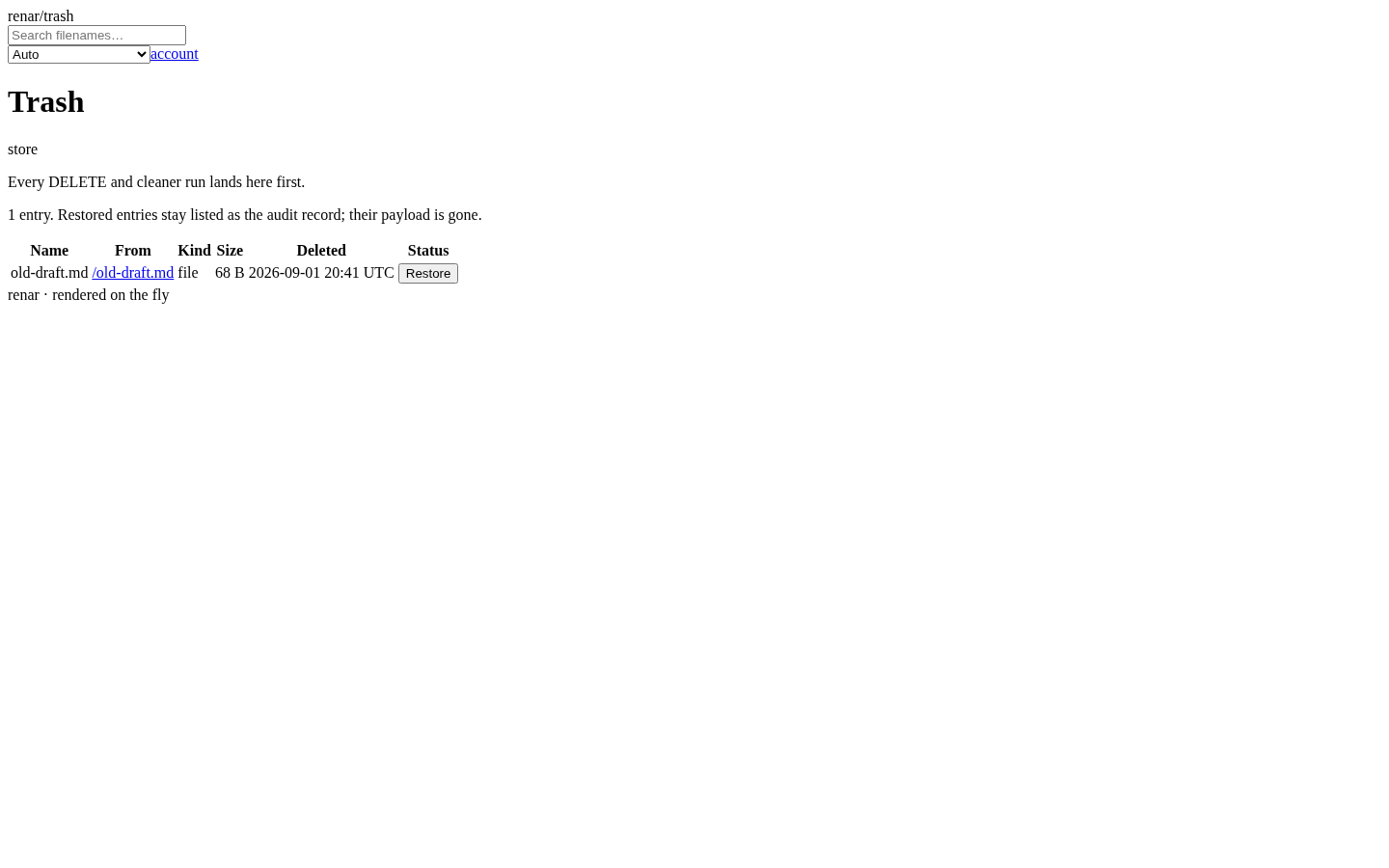
a ten-minute tour- Delete something, restore it. Delete a file from
the listing, open
/trash, restore it. Deletes are reversible by design — and the ledger row survives the restore. - Watch a tree change. Enable refresh on the demo listing and leave it open; another visitor's edit arrives live over SSE while the admission budget keeps the stream honest.
- Meet the JSON twins. The same pages you are
browsing answer as JSON for scripts — try
/status?format=json,/search?q=renar, or/metricswhile signed in. - Read the engine's self-declaration.
/statusshows edition, licensing state, posture and live ceilings;/postureshows every knob beside its tier preset. The two pages an auditor asks for, both public to the signed-in account. - Mint a share. Open the
/sharespage and mint a link to a subtree — the mint form owes step-up, so re-prove when asked — then open it in a private window: no account, read-only, expiring. That is the whole mechanism: the secret is the capability, and the same page lists and revokes what you minted. - Mount it. The demo answers WebDAV like any install:
console — the demo tree, mounted$ rclone lsd :webdav,url=https://demo.renar.asklera.fr/dav/demo/,vendor=other \
      :webdav: --webdav-user demo --webdav-pass "$(rclone obscure 'renar-demo-0.1.0')"

# or in gnome files / windows explorer:
#   davs://demo.renar.asklera.fr/dav/demo/
A mounted editor's writes land in the same trash, history and ledger as the browser's — mount it, save a file, then check the versions and the trash page.
Meanwhile, the stills
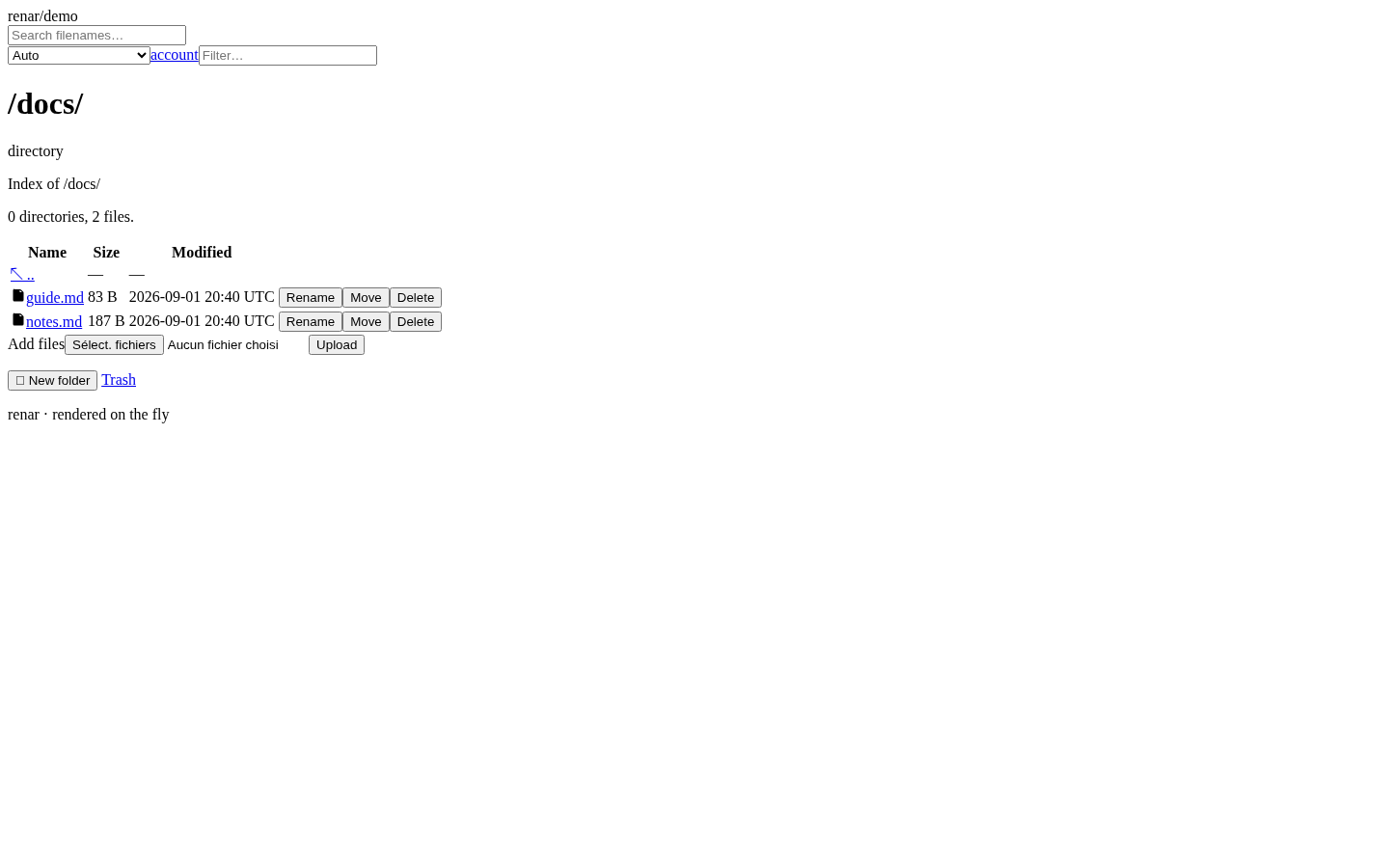
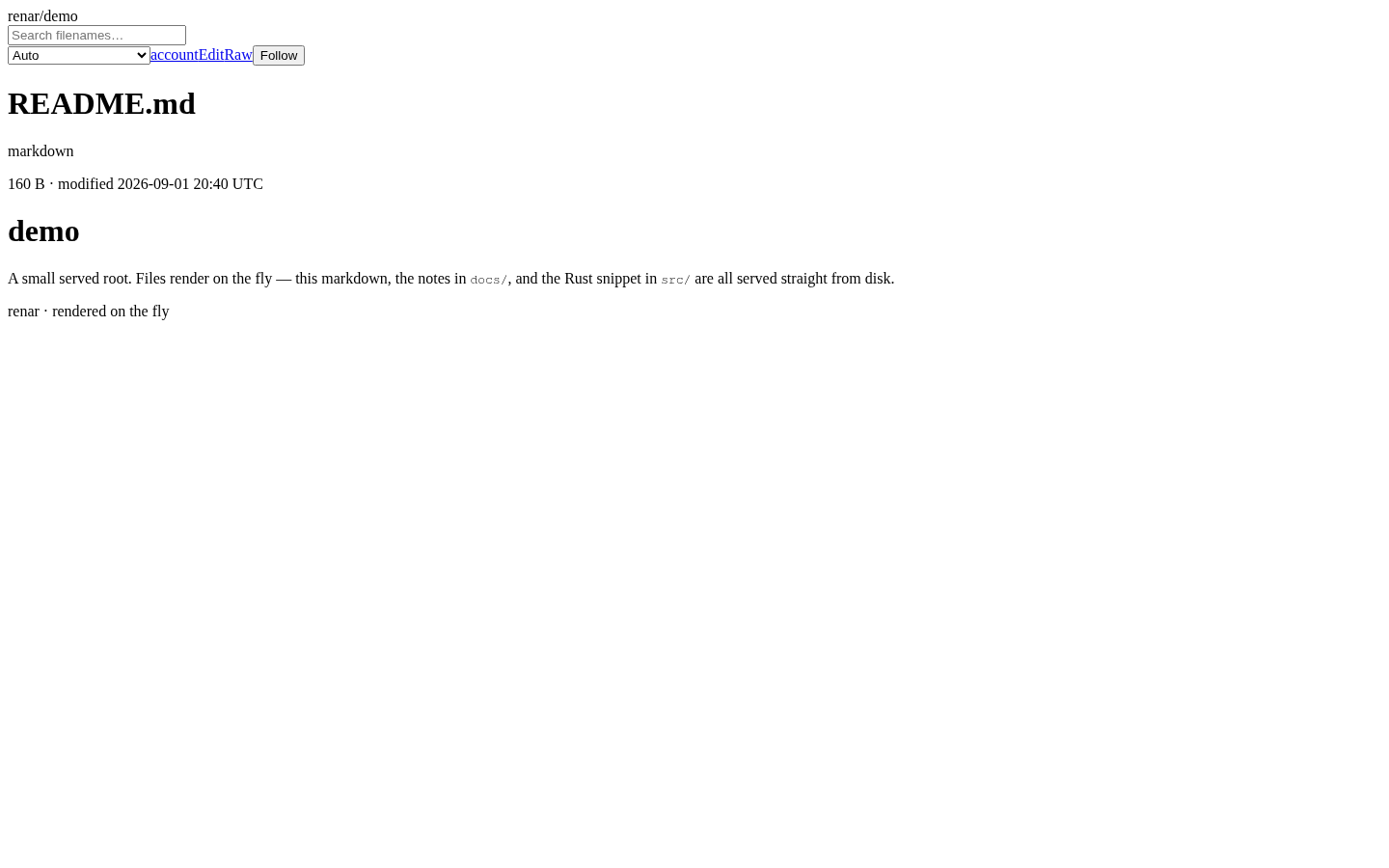
unretouched screenshots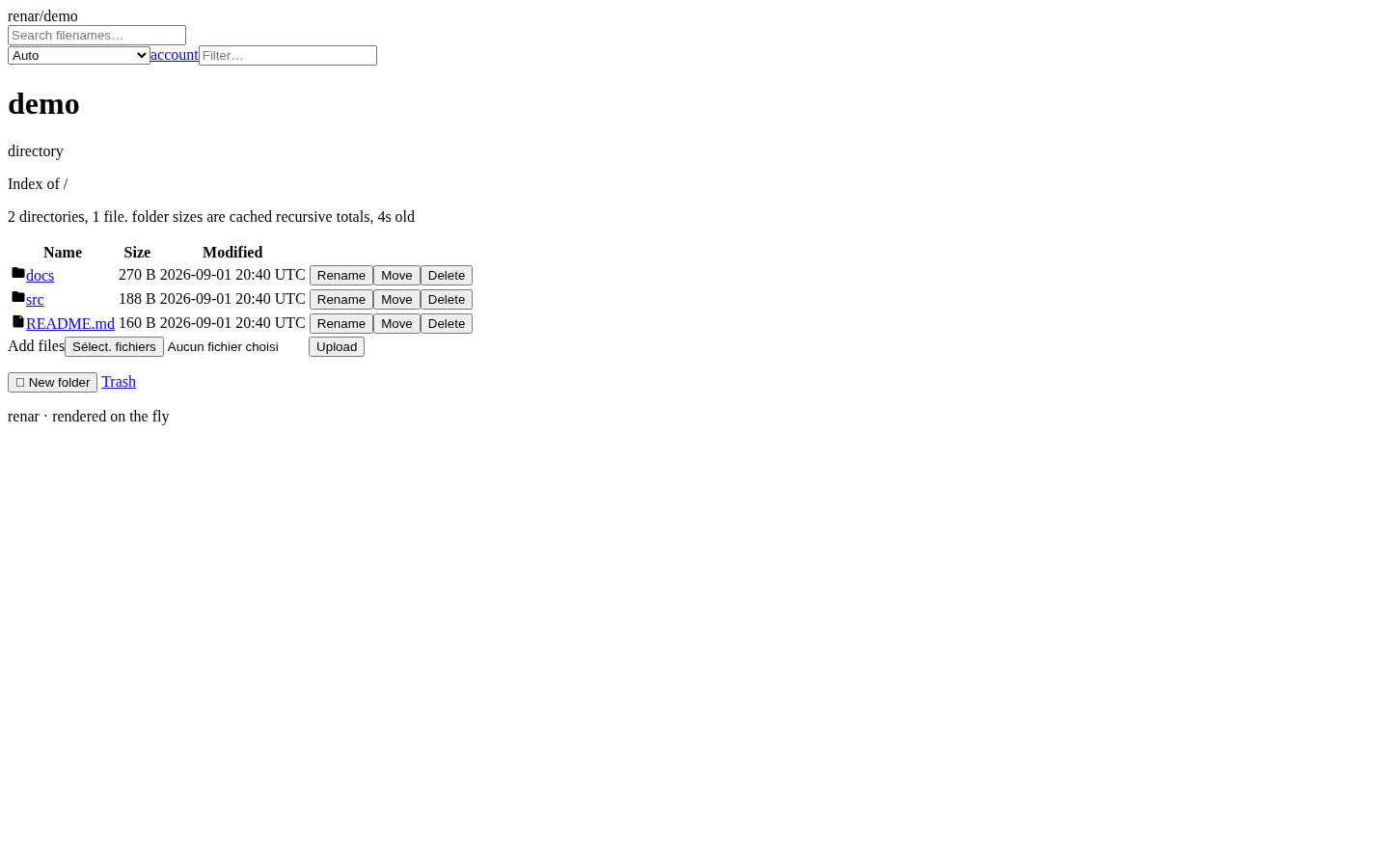
Or run it yourself, two commands from the install docs — the free build is the whole single-box product.